Yes, they can witness it#
| Who | Why |
|---|---|
| A friend | Over 18, has known you by your old name, independent of you |
| A neighbour | The same, and often the easiest to ask |
| Someone you work with | The same; a colleague is a good witness |
| Your GP, an accountant or another professional | If they know you. A professional witness carries no extra weight |
| A solicitor | Can, but is not needed; GOV.UK describes the deed being witnessed by ordinary adults |
No, they cannot#
| Who | Why |
|---|---|
| Your husband, wife or partner | Not independent of you |
| A parent, child, brother or sister | GOV.UK warns some organisations will not accept a close relative |
| An in-law or any other relative | Related by marriage still counts as related |
| Anyone who lives at your address | GOV.UK warns some organisations will not accept a witness at the same address, related or not |
| Anyone under 18 | GOV.UK's wording requires witnesses aged 18 or over |
| You | Nobody can witness their own signature |
What a witness does#
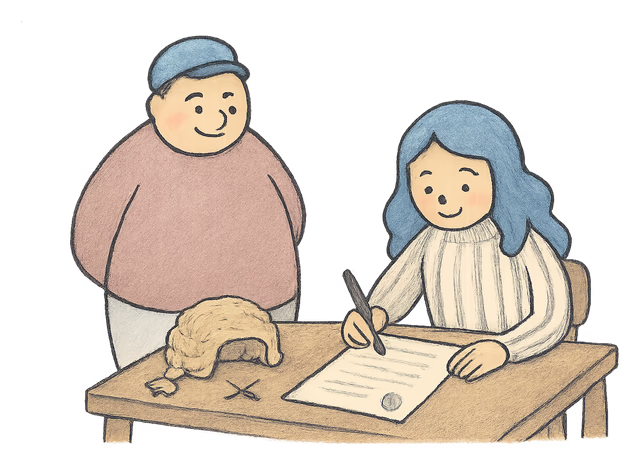
They watch you sign, then sign the deed themselves and write their full name, address and occupation underneath. They are confirming that they saw you sign, nothing more: not your identity, not your choice of name, and not anything about what you do with the deed. That is why a friend is as good as a solicitor, and why the one thing a witness must never do is sign a deed they did not see signed. Both have to be in the room; a video call or a signature added later does not count.
Where the rules come from#
The law requires one attesting witness for a deed made by an individual, under section 1 of the Law of Property (Miscellaneous Provisions) Act 1989, and says nothing about who. GOV.UK's wording for a home-made deed poll names two witnesses aged 18 or over and warns about relatives and shared addresses. Our deeds have space for two, and we recommend using both, because two independent adults is what organisations expect to see.